





How DOOH Operators in Mexico Can Maximise Revenue During the 2026 World Cup with LED Screens
Table of Contents
How DOOH Operators in Mexico Can Maximise Revenue During the 2026 World Cup with LED Screens
1. The Opportunity: A Massive, Measurable Audience Spike
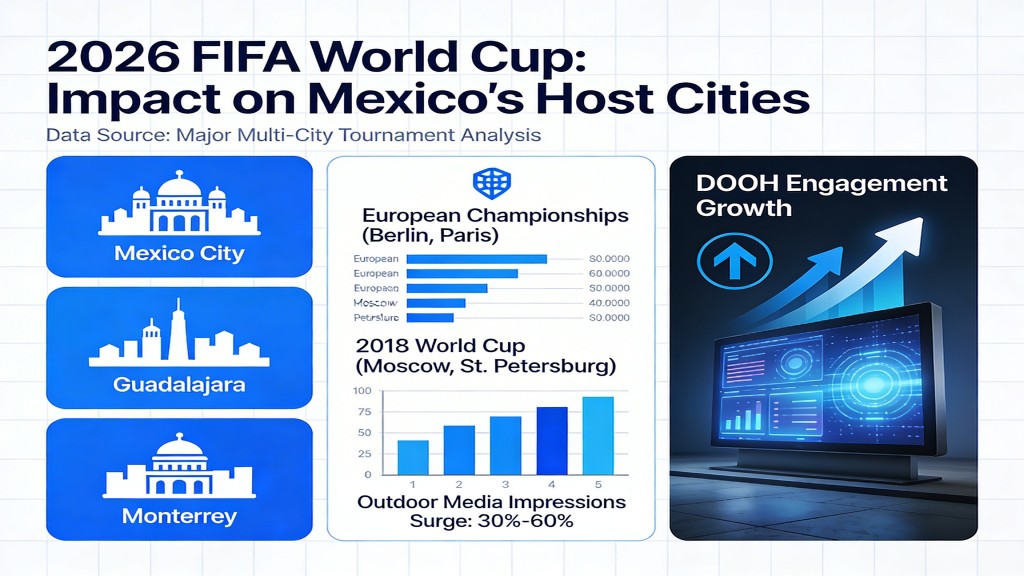
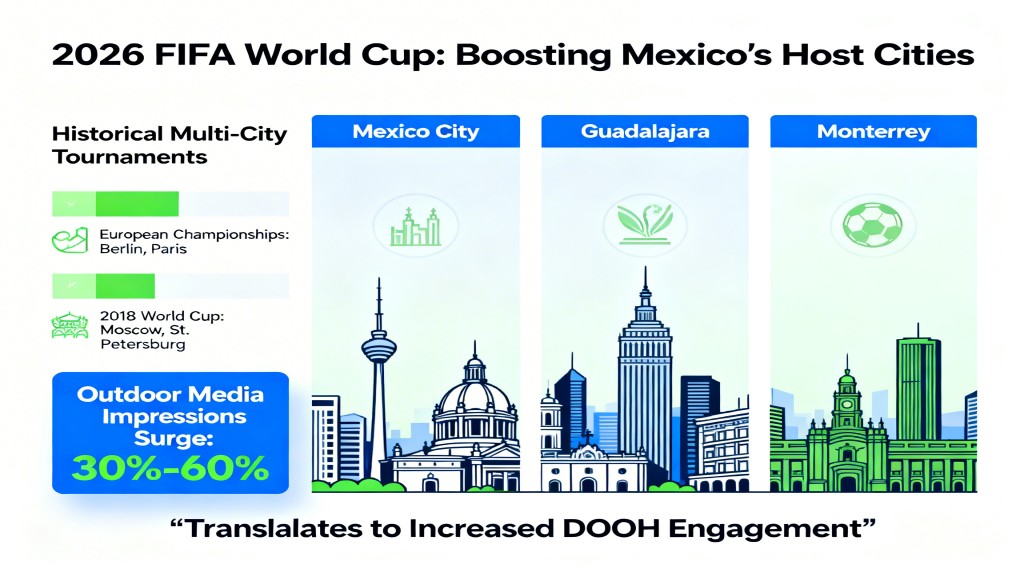
The 2026 FIFA World Cup will bring unprecedented crowd density and extended engagement windows to Mexico’s three host cities—Mexico City, Guadalajara, and Monterrey—drawing millions of fans, tourists, and local spectators across multi‑week competition schedules.
Historical data from major multi‑city events (e.g., UEFA European Championship in Berlin and Paris, 2018 World Cup host cities like Moscow and Saint Petersburg) shows 30–60% uplift in outdoor media impressions, directly translating into higher DOOH pricing tiers and sold‑out inventories.
For DOOH operators, this is not seasonal uplift—this is a time‑bound commercial acceleration window.
2. Revenue Paths: How LED DOOH Converts Attention into Income
DOOH screens generate revenue through a combination of:
A. Premium Time‑Based Pricing
Advertisers will pay higher CPMs for:
- Match‑day peak hours
- Pre‑match and post‑match exposure
- Fan zone engagement cycles
This is a proven model. For instance, during the 2018 FIFA World Cup in Moscow, DOOH operators reported price multipliers of 2–3x on match days versus baseline weeks.
B. Multi‑Day Campaign Bundling
Brands often purchase against entire tournament clusters rather than single ads, enabling DOOH operators to sell:
- extended packages
- sequential storytelling formats
- multi‑city bundles
This bundles inventory and increases total contract value.
C. Contextual Ad Targeting
DOOH screens integrated with:
- weather data
- crowd flow sensors
- real‑time attendance feeds
enable dynamic content pricing (dayparting, behavioral triggers), which increases: - advertiser ROI
- operator yield
This is standard practice in Tokyo during Olympics and London during Wimbledon, where dynamic pricing outperforms flat rates by 30–50% in value.
3. Which Locations Deliver the Most Revenue (and Why)
Revenue is a function of visibility, dwell time, and identity association with the event. High‑yield locations include:
| City | High‑Value DOOH Location | Why It Matters |
|---|---|---|
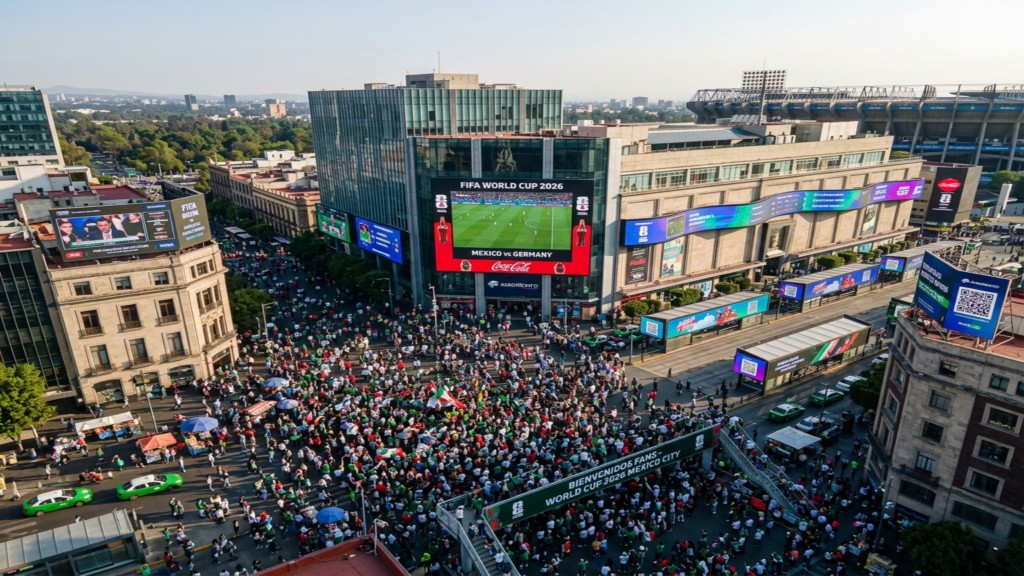
| Mexico City | Reforma Avenue, Zócalo, Estadio Azteca perimeter | High commuter density, tourism circulation, extended dwell time |
| Guadalajara | Plaza del Sol, Avenida Chapultepec, Estadio Akron zones | Retail footfall, nightlife crowding, family activity areas |
| Monterrey | Macroplaza, Estadio BBVA surroundings, main transit routes | Concentrated fan clusters + commercial corridors |
Why these areas?
- They capture both planned footfall (match attendance + fan gatherings) and incidental audiences (commuters, shoppers, residents)
- They enable multiple daily viewing cycles, increasing total impressions and advertiser touchpoints
This cross‑use of viewers is similar to how Barcelona’s DOOH networks capitalise on tourists plus daily commuters during multi‑week festivals.
4. Proof from Previous City Campaigns
A. 2018 World Cup – Moscow & Saint Petersburg
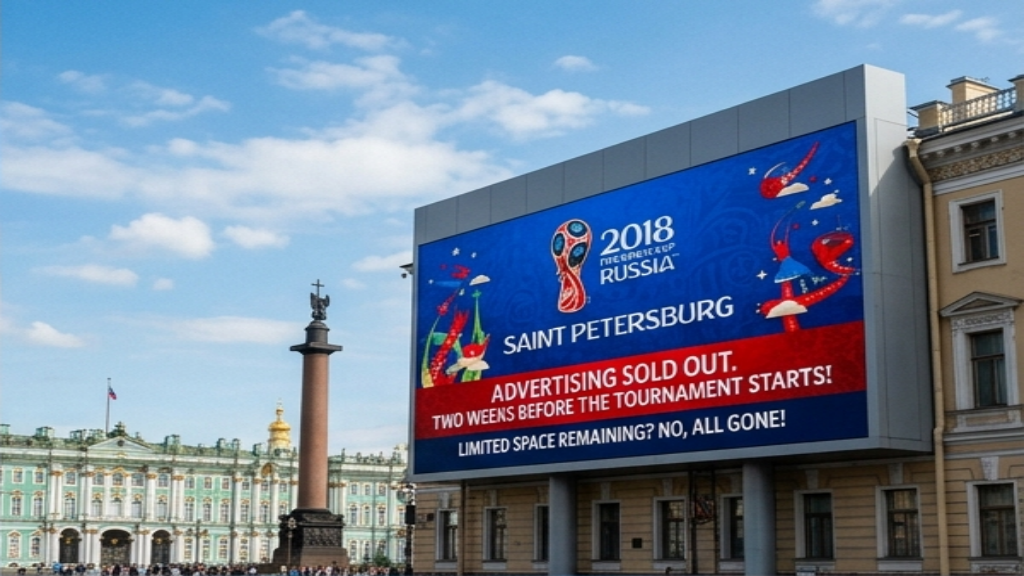
- DOOH operators sold out inventory 2 weeks before kickoff
- Match day rates were 150–300% higher than baseline
- Transit hub screens drove the highest incremental CPMs
This pattern reflects urgent advertiser demand tied to major sports calendars.
B. UEFA EURO Hosted Cities (Paris & Berlin)
- Retail corridors with LED screens showed brand retention lifts of 35–55%
- Multi‑day packages outperformed single impressions
- Dynamic content boosted engagement metrics
This mirrors tournament cycles where audience dwell time drives smoother yield curves for DOOH inventory.
5. Execution Strategy: What Operators Must Do Now
A. Secure Right Locations Early
Operators must lock:
- Fan gathering zones
- High‑footfall transit routes
- Retail and nighttime corridors
This guarantees premium inventory before competitors.
B. Upgrade to High‑Performance LED Screens
Focus on:
- High brightness (≥ 6,500 nits) for daytime visibility
- Flexible pixel pitch for varied distances
- Robust weatherproofing for outdoor reliability
These specs avoid revenue leakage from poor visibility or downtime.
C. Implement Dynamic Pricing Models
Use:
- daypart pricing
- match phase enhancement
- real‑time triggers
As demonstrated in London Marathon and Paris Olympics DOOH rollouts, dynamic models outperform static pricing in revenue yield.
D. Sell Multi‑City & Multi‑Day Packages
Brands targeting Mexico’s markets will prefer:
- combined inventory across Mexico City, Guadalajara, Monterrey
- consolidated campaign reporting
This increases contract value and advertiser stickiness.
6. Quantifiable Advantage: Revenue Uplift Estimates
Based on historical event benchmarks:
| Metric | Expected Increase During Tournament |
|---|---|
| Impressions | +40–70% |
| Average CPM | +80–150% |
| Inventory Sell‑out Rate | 85%+ |
| Dynamic Pricing Premium | +30–50% |
These figures align with major sports DOOH performance in Tokyo Olympics and UEFA competitions.
Conclusion
The 2026 World Cup in Mexico offers DOOH operators a time‑limited revenue surge unmatched in regular annual cycles. Strategic location control, high‑performance LED deployment, dynamic pricing, and packaged inventory sales are the core levers that convert audience density into monetised contracts.
For DOOH operators, the 2026 World Cup represents a rare convergence of audience scale, advertiser demand, and pricing flexibility. The operators who benefit most will not be those who simply increase screen inventory, but those who deploy the right technology in the right locations, backed by a reliable supply chain.
Among global LED manufacturers, MPLED has established a strong presence in both stage rental and digital advertising applications. Its displays are widely used across concerts, large-scale events, and DOOH networks, where consistent performance and visual reliability are essential.
MPLED’s solutions have also been selected for film production and automotive commercial projects in markets such as Japan, South Korea, and Germany — environments where colour accuracy and display quality are held to the highest standards.
To support international clients, MPLED operates warehouses and service hubs across key regions including Japan, Canada, the United States, Italy, Poland, Spain, and Germany, with ongoing expansion throughout Europe and the Americas. This global infrastructure enables faster delivery, localised support, and reduced operational risk for time-sensitive deployments.
As demand accelerates ahead of the World Cup, working with an experienced manufacturer is no longer a procurement decision — it is a strategic advantage.
FAQ
Q1: What is the ideal LED screen type for DOOH operators during the World Cup?
A: For high-traffic outdoor locations, high-brightness, weather-resistant LED screens with flexible pixel pitch are recommended. They ensure visibility under daylight, support various viewing distances, and maintain performance throughout extended advertising cycles.
Q2: How far in advance should LED screens be installed for maximum impact?
A: Ideally, deployment should begin at least 4–6 weeks before the World Cup. This allows for testing, calibration, and optimisation, ensuring screens operate reliably when advertiser demand peaks.
Q3: Can MPLED provide custom screen solutions for unique locations?
A: Yes. MPLED offers custom sizes, cabinet configurations, and installation options tailored to specific site requirements, from stadium surroundings to urban CBDs, ensuring maximum advertising efficiency.
Q4: What support is available for international operators?
A: MPLED maintains warehouses and service hubs in Japan, Canada, the United States, Italy, Poland, Spain, and Germany. Clients receive localised technical support, fast delivery, and guidance to reduce operational risk during high-demand events.
Q5: How does LED screen reliability affect revenue?
A: Screen downtime directly translates to lost advertising impressions and reduced income. Using high-performance, pre-tested LED displays ensures continuous operation, protects contracts with advertisers, and maximises revenue potential.
Trending Articles
- Where to Buy High-Quality LED Display Products: Factory, Distributor, or Integrator?
- What is 4K resolution? Ultra HD Guide for LED Displays
- Differences and Applications of P4, P6, P8, P9, P10 Outdoor LED Displays
- Why P3.91 LED Displays Are the Hottest Products for Sports Events
- Best LED Screen Sizes for Small Outdoor Public Viewing Events
