
How DOOH Operators in the U.S. Can Maximise Revenue During the 2026 World Cup with LED Screens
Table of Contents
1. Market Reality: The U.S. Is the Largest Advertising Battlefield
The 2026 World Cup in the United States is not just a sports event — it is the largest commercial media event in global history.
With host cities including New York, Los Angeles, Dallas, Miami, and Atlanta, the U.S. will absorb:
- The highest share of global sponsorship budgets
- The largest volume of international visitors
- The most aggressive brand competition
Translation for DOOH operators:
Inventory will sell out. Pricing will spike. Attention becomes currency.
2. How DOOH Actually Makes Money During the World Cup
Forget theory. Revenue comes from 3 specific mechanisms:
A. Match-Day Price Surge (Immediate Cash Multiplier)
During major events in cities like New York and Los Angeles:
- CPM rates typically increase 2–4x
- Prime time slots (2 hours before & after matches) are fully booked
- Brands pay premiums for real-time exposure
Typical DOOH Network Costs in Major U.S. Markets
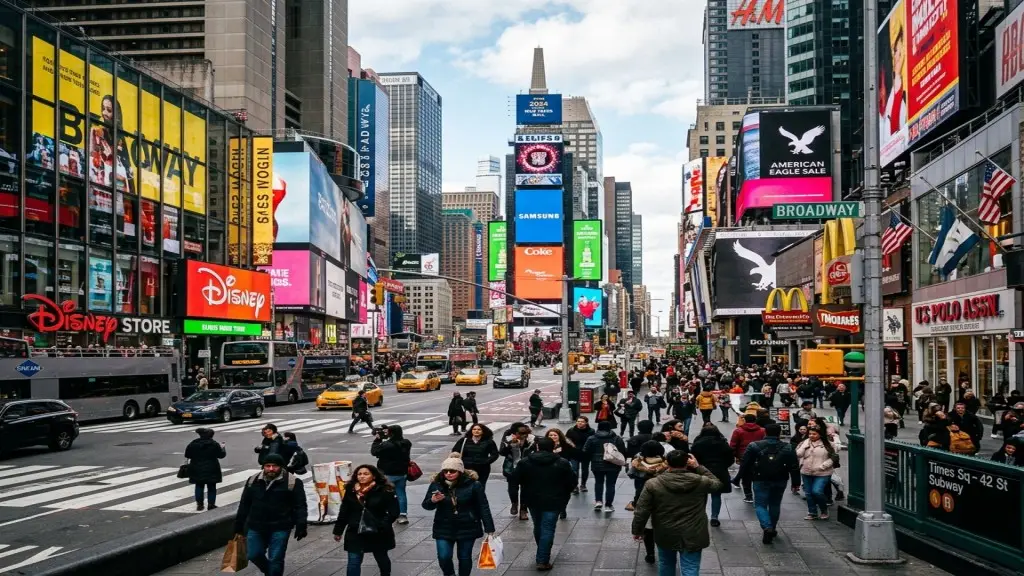
- Premium sites such as Times Square or other central landmarks may command significantly higher overall monthly rates, where advertising rentals can exceed $50,000+ per month.
B. Multi-City Campaign Contracts (Big Money Deals)
Global brands don’t buy one screen. They buy networks.
During the World Cup, advertisers will target:
- New York (media capital)
- Los Angeles (entertainment + tourism)
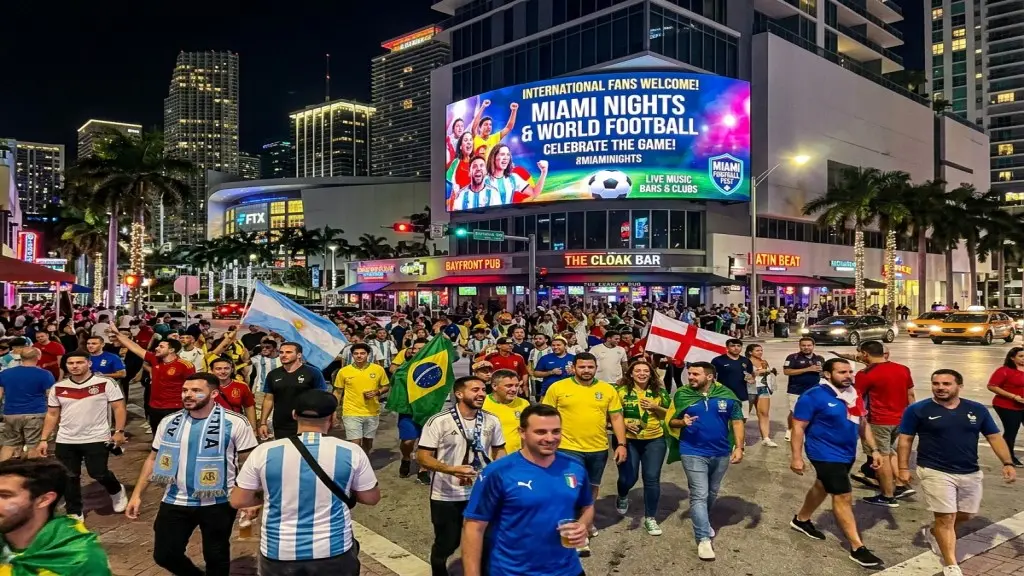
- Miami (Latin American audience hub)
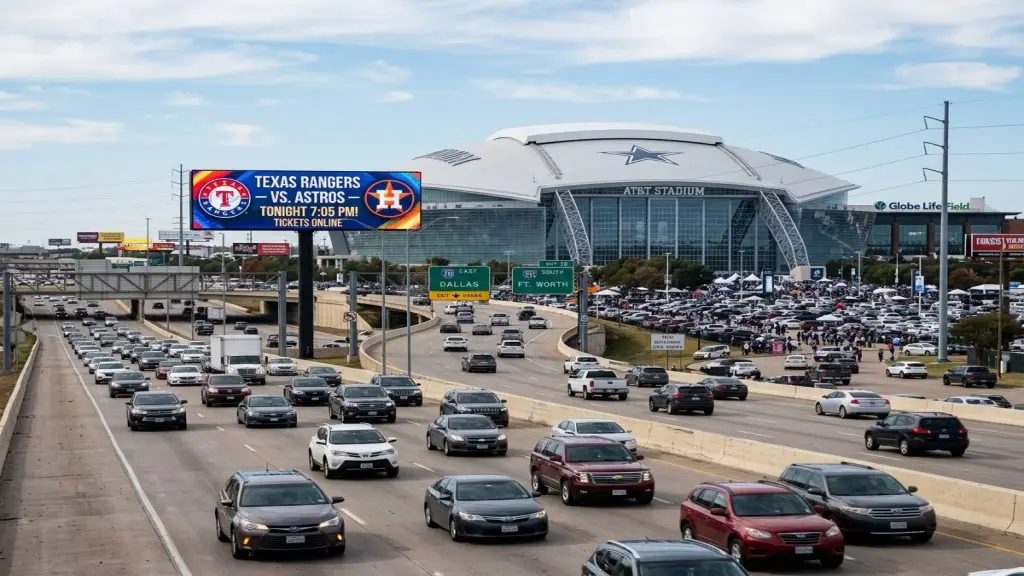
- Dallas (central traffic + stadium capacity)
This enables:
- bundled pricing
- longer contracts
- higher total deal value
C. Dwell-Time Monetisation (Where Real Profit Happens)
The U.S. advantage = long dwell environments
Highest revenue zones:
- Times Square (New York)
- Continuous exposure
- Tourist + event overlap
- Highest CPM in the world
- LA Live (Los Angeles)
- Sports + entertainment cluster
- Nighttime traffic explosion
- Brickell & Downtown Miami
- International fan concentration
- High-end brand targeting
- Stadium Fan Zones (All cities)
- Massive screens
- Long viewing time
- Sponsorship-driven ads
More time = more impressions = higher pricing power
3. Where the Money Is (U.S. City-Level Breakdown)
| City | High-Revenue Zones | Why They Print Money |
| New York | Times Square, Midtown, transit hubs | Global visibility + nonstop traffic |
| Los Angeles | LA Live, Hollywood, highways | Entertainment + tourism + car traffic |
| Dallas | Stadium district, highways | High-capacity stadium + driving culture |
| Miami | Downtown, beach zones | International fans + nightlife |
| Atlanta | Downtown, Mercedes-Benz Stadium | Transit + centralised fan movement |
4. What Actually Increases Revenue (Not Specs — Money Drivers)
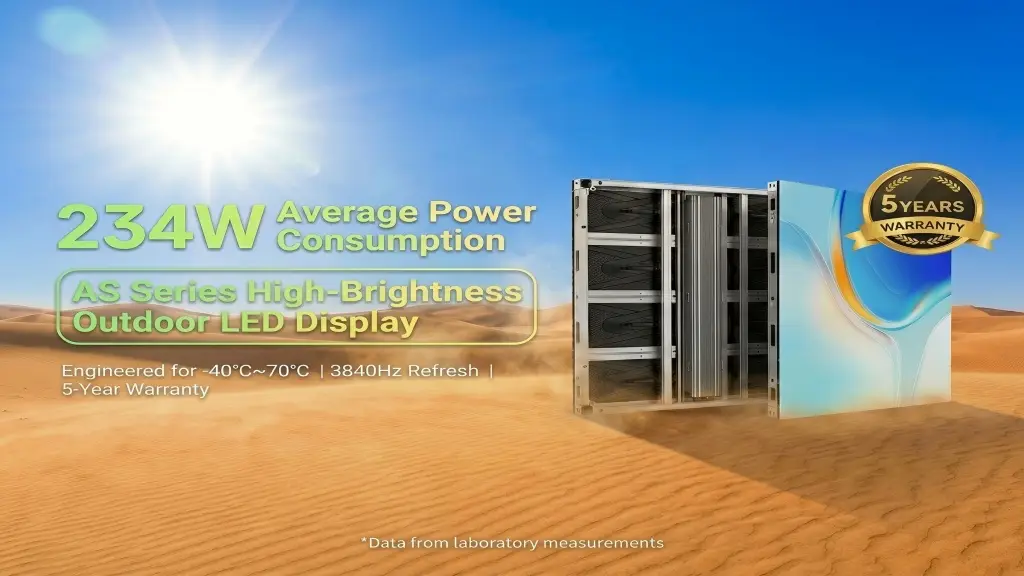
Brightness = Full-Day Revenue
- U.S. sunlight + long days
- Low brightness = lost daytime income
Pixel Pitch = Premium Pricing
- Close viewing areas (Times Square, plazas)
- Higher resolution = higher perceived value
Reliability = Contract Protection
- U.S. advertisers demand uptime
- Screen failure = penalties + reputation damage
5. Biggest Mistakes That Kill Profit
- Installing screens in traffic-only zones (no dwell time)
- Using low-brightness displays in outdoor environments
- Missing deployment window (too late before tournament)
- Working with slow or unstable suppliers
In the U.S., competition is brutal.
If you are late, inventory is already owned by someone else.
6. Execution Strategy (What Winning Operators Do)
Step 1: Lock Premium Locations Early
- Fan zones
- Downtown cores
- Entertainment districts
Step 2: Deploy High-Performance LED Screens
- ≥ 6500 nits brightness
- Outdoor IP-rated
- Scalable cabinet design
Step 3: Sell in Packages, Not Screens
- Multi-city bundles
- Match-day premium pricing
- Long-duration contracts
Step 4: Use Dynamic Pricing
- Match schedule-based pricing
- Daypart adjustments
- Real-time demand pricing
Conclusion
The 2026 FIFA World Cup presents a unique, time-limited revenue surge for DOOH operators across the United States. High-traffic urban cores, stadium fan zones, and entertainment districts in cities such as New York, Los Angeles, Dallas, Miami, and Atlanta will generate unprecedented audience density, creating opportunities for premium pricing, multi-city campaigns, and dynamic, high-impact advertising.
Operators who deploy high-performance LED screens in these strategic locations can capture maximum impressions, convert dwell time into measurable revenue, and secure long-term relationships with advertisers well beyond the tournament period.
Among global providers, MPLED stands out with its advanced stage rental and digital advertising LED solutions, proven in high-demand environments worldwide. Its displays have been successfully used in film productions, sports events, and large-scale commercial projects in markets such as Japan, South Korea, and Germany, delivering reliable brightness, accurate color performance, and uninterrupted operation.
To support U.S. and international clients, MPLED maintains warehouses and service hubs in Japan, Canada, the United States, Italy, Poland, Spain, and Germany, providing rapid deployment, technical support, and flexible solutions tailored to each site — ensuring operators can fully capitalize on high-stakes opportunities like the World Cup.
FAQ
Q1: What is the best LED screen for outdoor DOOH advertising?
A1: High-brightness outdoor LED screens (≥6,500 nits) with fine pixel pitch and IP-rated durability are optimal. These ensure visibility under sunlight, maintain high image quality for close viewing, and minimize downtime during high-traffic events like the World Cup.
Q2: How can I maximize DOOH revenue during the World Cup?
A2: Deploy LED screens in stadium fan zones, urban cores, and entertainment districts. Use multi-city campaigns, dynamic pricing for match-time slots, and longer ad loops in high-dwell locations to maximize impressions and CPM.
Q3: Which U.S. cities are best for World Cup LED advertising?
A3: New York, Los Angeles, Miami, Dallas, and Atlanta offer the highest audience density, combined local and tourist traffic, and entertainment/retail clusters ideal for premium DOOH exposure.
Q4: Why choose a global LED supplier like MPLED for event campaigns?
A4: MPLED provides high-quality, reliable screens, international logistics, and technical support, ensuring rapid deployment, consistent brightness and color performance, and uptime critical for time-sensitive campaigns.
Q5: How do I choose the right pixel pitch for my LED screen?
A5: Pixel pitch should match viewing distance: closer audience areas (plazas, fan zones) require finer pitch (P3–P4), while highways and large stadium displays can use P5–P10. Correct selection maximizes image clarity and ad value.
Trending Articles
- Where to Buy High-Quality LED Display Products: Factory, Distributor, or Integrator?
- What is 4K resolution? Ultra HD Guide for LED Displays
- Differences and Applications of P4, P6, P8, P9, P10 Outdoor LED Displays
- Why P3.91 LED Displays Are the Hottest Products for Sports Events
- Best LED Screen Sizes for Small Outdoor Public Viewing Events
