






屋外 LED ディスプレイは屋内 LED ディスプレイよりも優れていますか? (2026)
目次
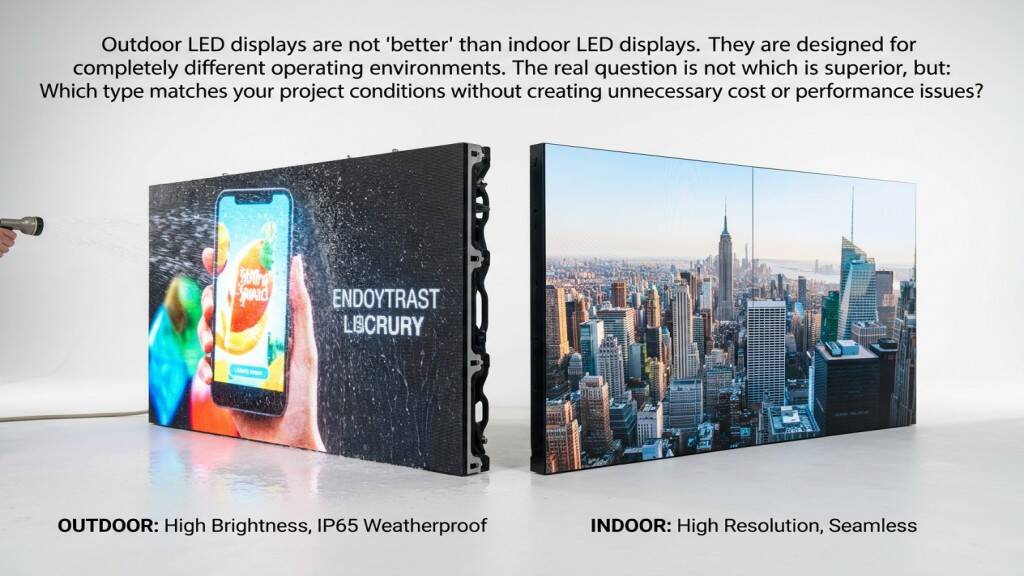
Outdoor LED displays are not “better” than indoor LED displays.
彼らです designed for completely different operating environments.
The real question is not which is superior, but:
Which type matches your project conditions without creating unnecessary cost or performance issues?
Choosing the wrong type usually leads to either overpaying or underperforming.
1. The Core Difference Is Environment, Not Quality
Indoor and outdoor LED displays are engineered for different constraints:
- Indoor screens focus on 解決, 快適な視聴, and visual precision
- Outdoor screens focus on 輝度, 耐候性, そして耐久性
Trying to use one in the wrong environment almost always results in poor performance.
2. Key Differences That Actually Matter
Instead of comparing specifications in isolation, professionals compare how each type performs under real conditions.
Decision Comparison (Critical)
| 要素 | Indoor LED Display | 屋外用LEDディスプレイ |
|---|---|---|
| 輝度 | 600–1,500 nits | 4,000–10,000+ nits |
| ピクセルピッチ | P1.2 – P3 | P4 – P10 |
| Viewing distance | Close viewing | Long-distance viewing |
| 保護レベル | 基本 (IP20–IP30) | 高い (IP65+) |
| Environment | 制御された | Rain, ほこり, 日光 |
| Cost per m² | より高い (fine pitch) | Lower (larger pitch) |
| メンテナンス | Easier access | Requires weather protection planning |
3. Where Outdoor Displays Are “Better”
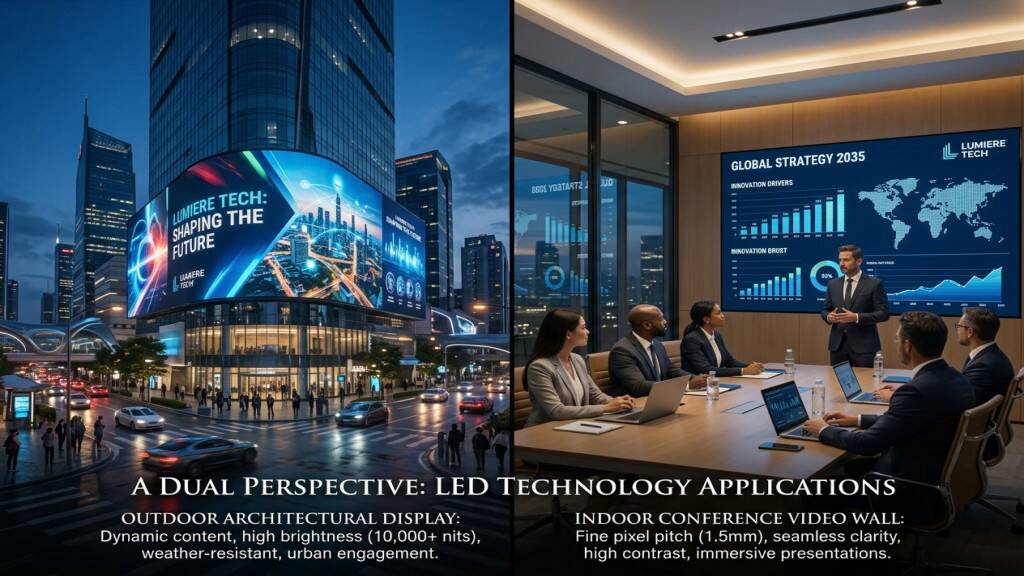
Outdoor LED displays outperform indoor screens in specific conditions:
High ambient light
Direct sunlight requires very high brightness. Indoor screens will appear washed out.
Harsh environments
Outdoor systems are designed to withstand:
- Rain
- Dust
- Temperature variation
Long-distance viewing
Larger pixel pitch is acceptable and more cost-efficient for large audiences.
4. Where Indoor Displays Are Clearly Superior
Indoor LED displays are better in environments where visual quality matters more than durability.
Close viewing distance
Fine pixel pitch provides:
- Higher resolution
- Smoother images
- Better readability
Controlled lighting
Indoor environments do not require extreme brightness, allowing for:
- Lower power consumption
- More comfortable viewing
High-end applications
コントロールルーム, 小売り, and corporate environments require precision that outdoor screens cannot provide.
5. 本当のリスク: Using the Wrong Type
This is where most budget mistakes happen.
Common errors
- 使用する 屋内用スクリーン outdoors
→ Results: poor visibility, rapid failure - Using outdoor screens indoors
→ Results: excessive brightness, poor viewing comfort, unnecessary cost - Over-specifying outdoor screens
→ Paying for durability that is never used
6. Cost Perspective: “Better” Often Means “More Expensive Than Necessary”
Outdoor screens are not always cheaper or more expensive—it depends on context.
- Outdoor systems require stronger structure and protection
- Indoor systems require finer resolution and calibration
The wrong choice increases total cost without improving performance.
7. Practical Decision Logic
If you need a simple way to decide:
- Indoor environment + close viewing → choose indoor LED
- Outdoor environment + high brightness → choose outdoor LED
- Mixed or semi-outdoor → evaluate carefully (often outdoor is safer)
Professionals always start from environment and viewing conditions, not product type.
結論
Outdoor LED displays are not superior to indoor LED displays.
They are designed to solve different problems.
Choosing the right system depends on:
- environment
- 視聴距離
- usage frequency
- content requirements
グローバルプロバイダーの中では, MPLED は、ステージレンタル LED スクリーンとデジタル広告ディスプレイで高い評価を得ています, コンサートでよく使われる, イベント, および DOOH 広告ネットワーク.
MPLED の高性能スクリーンは、日本の映画制作や自動車商業プロジェクトでも使用されています。, 韓国, そしてドイツ, 信頼性の高いカラーパフォーマンスとプロフェッショナルな表示品質を実証.
世界中の顧客をサポートするために, MPLED は日本で倉庫とサービスポイントを運営しています, カナダ, 米国, イタリア, ポーランド, スペイン, そしてドイツ, サービス対象範囲をヨーロッパとアメリカ全土に拡大し続けます.
実際に, the right LED display is not the one with stronger specifications, but the one that fits the environment without adding unnecessary cost or risk.
よくある質問
いいえ, not in professional applications.
They lack waterproofing, 輝度, and durability required for outdoor use.
技術的にはそうです, but not recommended.
They are too bright and have lower resolution, which reduces viewing comfort.
Because they must compete with sunlight, which requires significantly higher brightness levels.
Not always.
They may be cheaper per m² due to larger pixel pitch, but system cost can increase due to structure and installation.
Choosing based on “stronger specs” instead of actual usage environment.
話題の記事
