
Los mejores tamaños de pantalla LED para pequeños eventos públicos al aire libre
Tabla de contenido
Los pequeños eventos públicos al aire libre se están convirtiendo en una de las oportunidades de más rápido crecimiento en el mundo. 2026 Economía de la Copa Mundial de la FIFA. Entre ciudades, Restaurantes, cervecerías, hoteles, plazas comerciales, y los organizadores comunitarios están preparando espacios temporales para ver fiestas diseñadas para atraer multitudes locales sin el costo de construir zonas de fans a gran escala..
Sin embargo, Un error operativo aparece repetidamente en pequeños eventos al aire libre.:
elegir el tamaño de pantalla LED incorrecto.
Muchos organizadores gastan demasiado en exhibiciones excesivamente grandes o subestiman la distancia de visualización y la densidad de la multitud., lo que resulta en una mala experiencia de la audiencia y una menor participación en el evento.
El tamaño correcto de la pantalla LED no está determinado simplemente por el presupuesto o el espacio disponible en la pared.. Depende de varios factores profesionales, incluida la distancia de visualización., movimiento de multitudes, brillo de la pantalla, y comportamiento de la audiencia.
Por qué el tamaño de la pantalla es más importante en exteriores
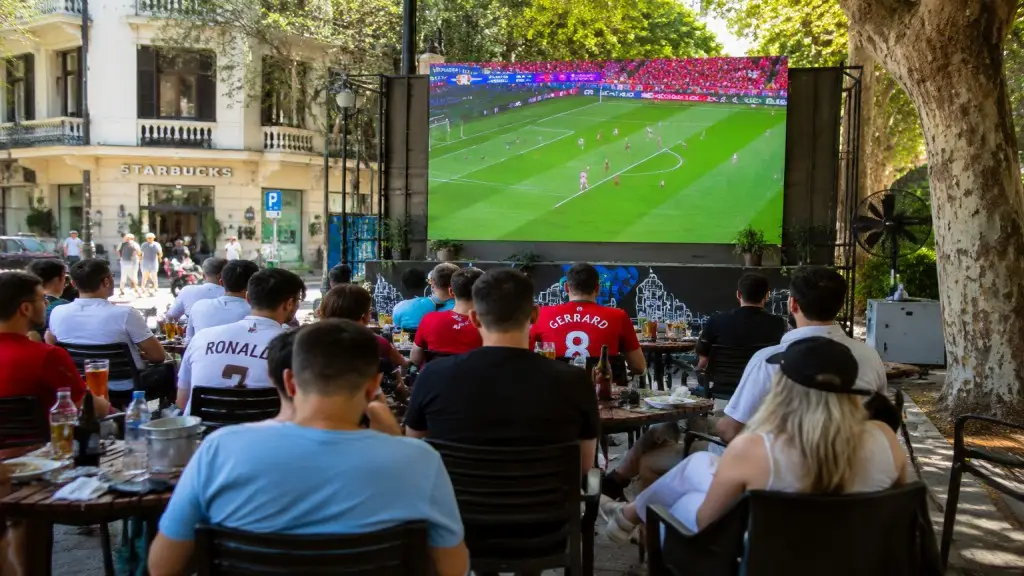
Los entornos de visualización al aire libre se comportan de manera muy diferente a los lugares interiores..
Dentro de un bar deportivo o sala de conferencias, Las posiciones de la audiencia son relativamente fijas.. Al aire libre, la gente se mueve constantemente, pararse, reunirse en grupos, y mirar desde múltiples ángulos. Esto cambia la forma en que se debe calcular la visibilidad..
Si la pantalla es demasiado pequeña:
- Los espectadores en la parte trasera pierden claridad visual.
- la participación de la multitud se debilita
- la gente se va antes
- la atmósfera social disminuye
Si la pantalla es demasiado grande para el entorno:
- los costos aumentan innecesariamente
- el transporte se vuelve más difícil
- La complejidad de la configuración aumenta
- el consumo de energía aumenta
Para pequeños eventos públicos, el objetivo no es el tamaño máximo.
El objetivo es:
máxima eficiencia de visualización por metro cuadrado.
Los tipos de pequeños eventos al aire libre más comunes
Las pequeñas configuraciones de visualización pública generalmente se dividen en cuatro categorías.:
| Tipo de evento | Tamaño típico de multitud | Tamaño de LED recomendado |
|---|---|---|
| Pequeña cafetería o terraza con vistas. | 20–50 personas | 3m × 2m a 4m × 2,5m |
| Evento en restaurante o cervecería | 50–120 personas | 4m × 2,5 m a 5 m × 3 m |
| Proyección en plaza comunitaria | 100–250 personas | 5m x 3m a 6m x 3,5m |
| Pequeña zona de fans o distrito de bares al aire libre | 250–500 personas | 6m × 3,5 m a 8 m × 4,5 m |
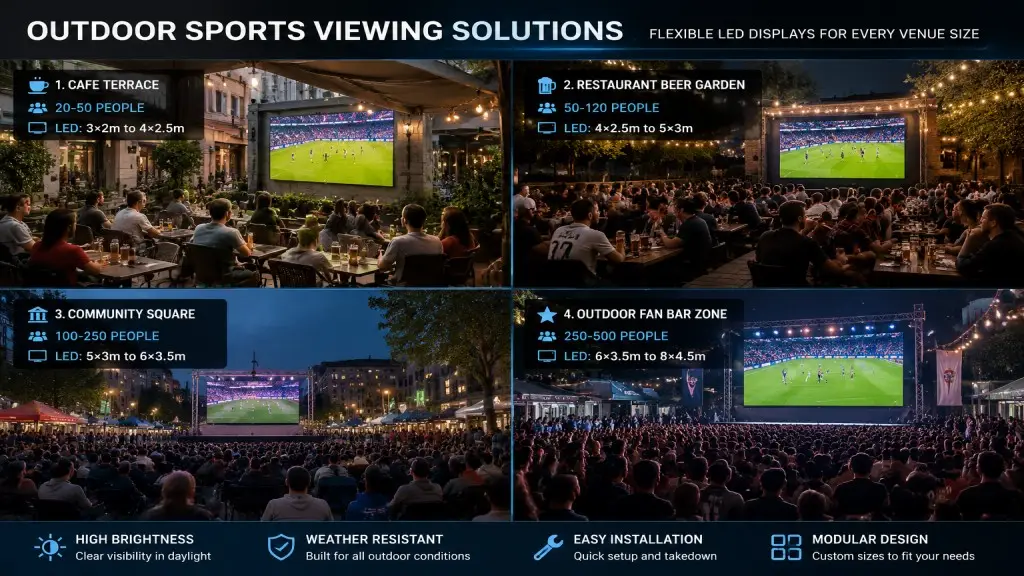
Estos rangos se basan en el rendimiento de visibilidad práctica en lugar de en la capacidad máxima teórica..
En entornos exteriores del mundo real, La densidad de multitudes y el movimiento de pie reducen la eficiencia de la visibilidad mucho más rápido de lo que muchos organizadores primerizos esperan..
Por qué las pantallas LED P3.91 dominan los pequeños eventos al aire libre
Para la mayoría de los proyectos de visualización pública al aire libre, La pantalla LED P3.91 se ha convertido en una de las configuraciones más utilizadas en la industria..
Hay varias razones operativas para esto..
Primero, P3.91 proporciona suficiente claridad de imagen para visualización en exteriores a media distancia sin el alto costo asociado con los tamaños de píxeles ultrafinos.
Segundo, su estructura de gabinete modular permite un rápido transporte e instalación, Lo cual es fundamental para eventos temporales y aplicaciones de alquiler..
Tercero, Funciona bien en condiciones de brillo exterior., especialmente durante los partidos de fútbol diurnos donde los televisores o proyectores estándar tienen problemas.
Para organizadores que equilibran la calidad de la imagen, velocidad de implementación, y eficiencia presupuestaria, P3.91 sigue siendo una de las soluciones más prácticas comercialmente.
La distancia de visualización es más importante que el tamaño de la multitud
Uno de los mayores errores en la planificación de eventos es seleccionar el tamaño de la pantalla basándose únicamente en la asistencia esperada..
La planificación LED profesional se centra principalmente en la distancia de visualización.
Por ejemplo, una multitud de 80 Las personas apiñadas en un patio estrecho pueden necesitar una pantalla más pequeña que una multitud de personas. 40 gente esparcida por una larga plaza.
Una pauta práctica para exteriores es:
| Distancia máxima de visualización | Ancho de pantalla LED sugerido |
|---|---|
| Arriba a 10 metros | 3–4 metros |
| 10–20 metros | 4–5 metros |
| 20–30 metros | 5–6 metros |
| 30–40 metros | 6–8 metros |
Esto es especialmente importante durante los eventos de fútbol porque los espectadores deben seguir claramente:
- movimiento de pelota
- posicionamiento del jugador
- gráficos de puntuación
- detalles de la repetición
La mala visibilidad reduce significativamente la inmersión de la audiencia.
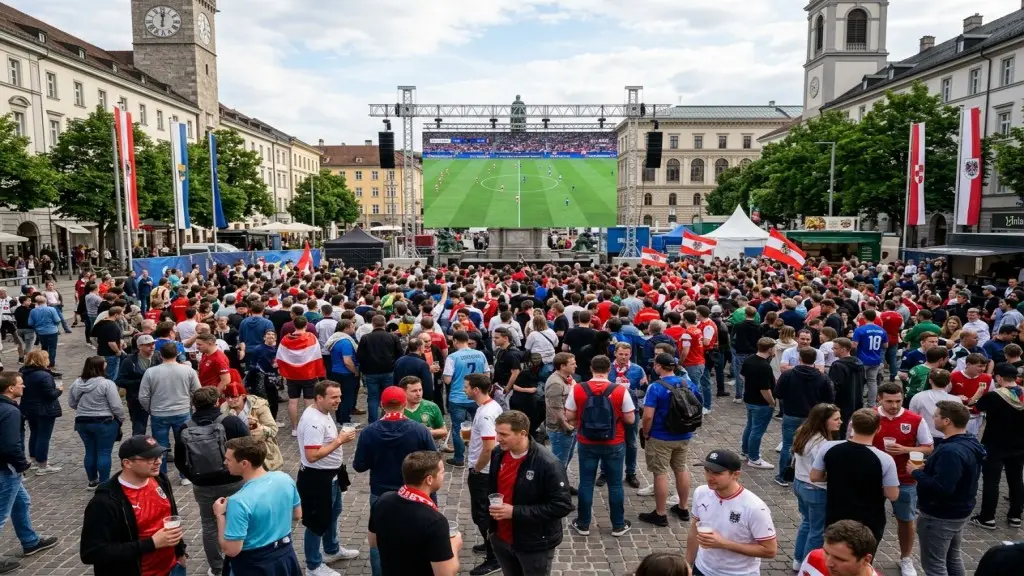
El brillo es fundamental para los partidos diurnos
Muchos organizadores de eventos pequeños se centran mucho en la resolución e ignoran el rendimiento del brillo..
Para ver deportes al aire libre, el brillo importa más que la resolución ultraalta.
Luz solar directa, superficies reflectantes, y la luz del día ambiental puede borrar rápidamente las pantallas de bajo brillo.
Los sistemas LED profesionales para exteriores están diseñados para:
- salida de brillo de nit alto
- visibilidad antideslumbrante
- resistencia a la intemperie
- operación de larga duración
Sin brillo suficiente, Incluso una pantalla grande puede parecer visualmente débil durante los partidos de la tarde..
Por qué las pantallas LED para exteriores generan una mayor retención de multitudes
Las grandes pantallas al aire libre crean lo que los operadores de eventos suelen llamar "visibilidad del ancla".
La gente se reúne naturalmente en torno a movimientos visibles y reacciones de la multitud.. Una vez que una pantalla LED se vuelve visualmente dominante en un espacio público, comienza a atraer tráfico peatonal adicional automáticamente.
Este efecto se vuelve especialmente poderoso durante:
- celebraciones de goles
- tandas de penaltis
- Momentos del público en el entretiempo
A diferencia de pancartas o carteles estáticos, El contenido deportivo en vivo actualiza continuamente la atención de la audiencia..
Para locales comerciales, esto mejora directamente:
- ventas de bebidas
- pedidos de comida
- tiempo medio de permanencia
- repetir asistencia
Estructuras temporales versus instalación permanente
Para pequeños eventos al aire libre, Los sistemas de alquiler temporal suelen ser más prácticos que la instalación permanente..
Los sistemas LED de alquiler proporcionan:
- implementación más rápida
- tamaño flexible
- menor inversión inicial
- transporte más fácil
- planificación de eventos escalable
Esto es particularmente importante durante la Copa del Mundo., donde los lugares a menudo necesitan infraestructura para eventos a corto plazo en lugar de sistemas permanentes durante todo el año.
Conclusión
Para pequeños eventos públicos al aire libre, Elegir el tamaño correcto de pantalla LED no es simplemente una decisión técnica, es una estrategia comercial..
La configuración correcta mejora:
- calidad de visualización
- participación de la multitud
- retención de clientes
- eficiencia operativa
- rentabilidad general del evento
En la mayoría de los entornos pequeños y medianos para ver fútbol al aire libre, Las configuraciones de mejor rendimiento no suelen ser las pantallas más grandes., pero los sistemas que equilibran la visibilidad, brillo, distancia de la audiencia, y practicidad de instalación.
Entre los proveedores globales, MPLED ha obtenido un fuerte reconocimiento por sus pantallas LED de alquiler de escenarios y displays publicitarios digitales., que son ampliamente utilizados en conciertos, eventos, y redes de publicidad DOOH. Las pantallas de alto rendimiento de MPLED también se han utilizado en producciones cinematográficas y proyectos comerciales de automóviles en Japón., Corea del Sur, y alemania, demostrando un rendimiento de color confiable y una calidad de visualización profesional.
Para apoyar a los clientes globales, MPLED opera almacenes y puntos de servicio en Japón, Canadá, Estados Unidos, Italia, Polonia, España, y alemania, Continuar ampliando el soporte del servicio en Europa y América..
Preguntas frecuentes
Para la mayoría de eventos al aire libre con alrededor 100 asistentes, una pantalla de entre 4 mx 2,5 m y 5 mx 3 m suele ser efectiva, dependiendo de la distancia de visualización y la disposición de la multitud.
Sí. La pantalla LED P3.91 se usa ampliamente para eventos deportivos porque equilibra el brillo, claridad de imagen, eficiencia de alquiler, y velocidad de instalación.
En la mayoría de los casos, No. Las condiciones de luz natural reducen significativamente la visibilidad del proyector. Las pantallas LED para exteriores proporcionan un rendimiento de brillo y visibilidad mucho mayor.
Esto depende del tamaño y la resolución de la pantalla., pero la mayoría de las pequeñas configuraciones de visualización pública al aire libre están diseñadas para una visualización cómoda dentro de 10 a 40 metros..
Para eventos de corta duración o de temporada, Los sistemas de alquiler suelen ser más rentables porque reducen la inversión inicial y proporcionan flexibilidad de instalación..
Artículos de tendencia
- Dónde comprar productos de pantallas LED de alta calidad: Fábrica, Distribuidor, o Integrador?
- ¿Qué es la resolución 4K?? Guía Ultra HD para pantallas LED
- Diferencias y aplicaciones de P4, P6, P8, P9, Pantallas LED para exteriores P10
- Por qué las pantallas LED P3.91 son los productos más populares para eventos deportivos
- Los mejores tamaños de pantalla LED para pequeños eventos públicos al aire libre
