





실외 LED 디스플레이가 실내 LED 디스플레이보다 우수합니까?? (2026)
목차
실외 LED 디스플레이는 실내 LED 디스플레이보다 "더 좋지" 않습니다..
그들은 완전히 다른 운영 환경을 위해 설계됨.
진짜 질문은 어느 것이 우월한가가 아닙니다., 하지만:
불필요한 비용이나 성능 문제를 일으키지 않고 프로젝트 조건에 맞는 유형?
잘못된 유형을 선택하면 일반적으로 초과 지불 또는 실적 저조로 이어집니다..
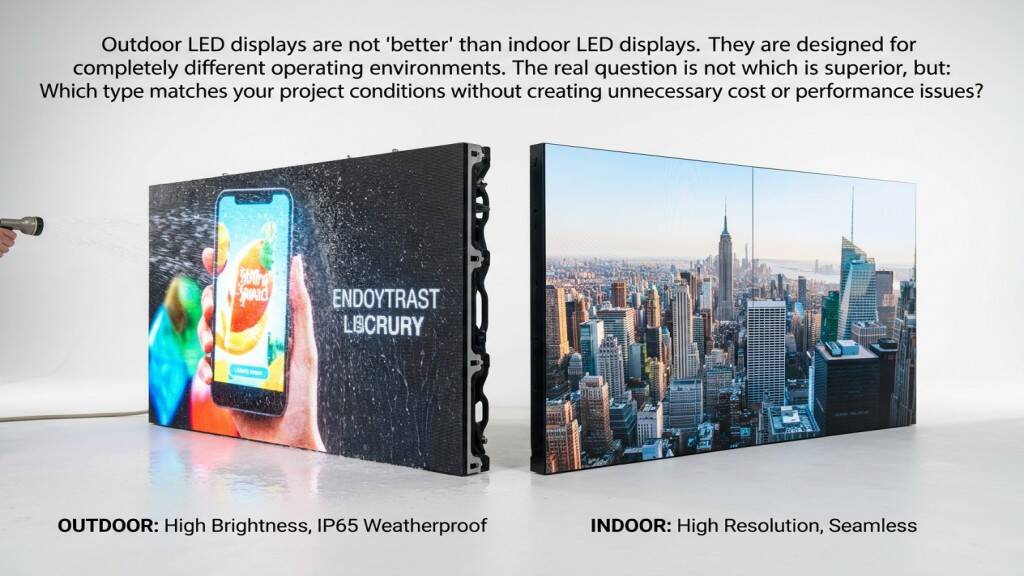
1. 핵심 차이점은 환경입니다, 품질이 아님
실내 및 실외 LED 디스플레이는 다양한 제약 조건에 맞게 설계되었습니다.:
- 실내 스크린에 중점을 둡니다. 해결, 보는 편안함, 시각적 정확성
- 옥외 스크린은 다음에 중점을 둡니다. 명도, 내후성, 그리고 내구성
잘못된 환경에서 사용하려고 하면 거의 항상 성능이 저하됩니다..
2. 실제로 중요한 주요 차이점
사양을 따로 비교하는 대신, 전문가 비교 실제 조건에서 각 유형의 성능.
결정 비교 (비판적인)
| 요인 | 실내 LED 디스플레이 | 옥외용 LED 디스플레이 |
|---|---|---|
| 명도 | 600–1,500니트 | 4,000–10,000+ 니트 |
| 픽셀 피치 | P1.2 – P3 | P4 – P10 |
| 시청 거리 | 자세히 보기 | 장거리 시청 |
| 보호 수준 | 기초적인 (IP20~IP30) | 높은 (IP65+) |
| 환경 | 통제됨 | 비, 먼지, 햇빛 |
| m²당 비용 | 더 높은 (미세한 피치) | 낮추다 (더 큰 피치) |
| 유지 | 더 쉬운 접근 | 날씨 보호 계획이 필요합니다 |
3. 옥외 디스플레이가 "더 나은" 곳
실외 LED 디스플레이는 특정 조건에서 실내 화면보다 성능이 뛰어납니다.:
높은 주변광
직사광선에는 매우 높은 밝기가 필요합니다.. 실내 스크린은 바랜 것처럼 보입니다..
가혹한 환경
실외 시스템은 견딜 수 있도록 설계되었습니다.:
- 비
- 먼지
- 온도 변화
장거리 시청
대규모 청중에게는 더 큰 픽셀 피치가 허용되며 더 비용 효율적입니다..
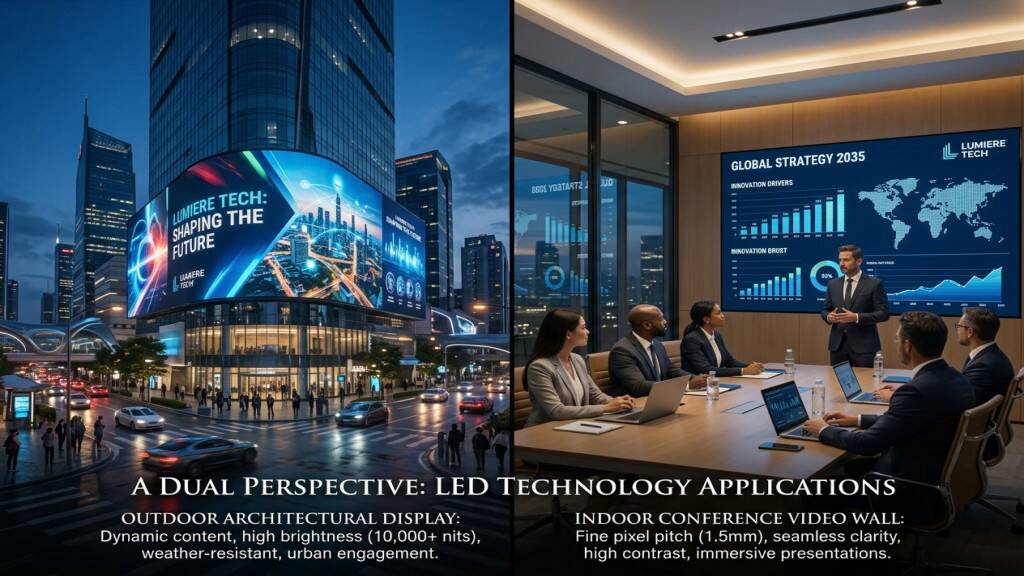
4. 실내 디스플레이가 확실히 뛰어난 곳
실내 LED 디스플레이는 내구성보다 시각적 품질이 더 중요한 환경에서 더 좋습니다..
가까운 시청 거리
미세한 픽셀 피치 제공:
- 더 높은 해상도
- 더 부드러운 이미지
- 더 나은 가독성
조명 제어
실내 환경에서는 극도의 밝기가 필요하지 않습니다., 허용하는:
- 낮은 전력 소비
- 더욱 편안한 시청
고급 애플리케이션
제어실, 소매, 기업 환경에서는 실외 스크린이 제공할 수 없는 정밀도가 필요합니다..
5. 실제 위험: 잘못된 유형 사용
대부분의 예산 실수가 발생하는 곳입니다..
일반적인 오류
- 사용 실내 스크린 옥외
→ 결과: 시야가 좋지 않음, 급속한 실패 - 실내에서 실외 스크린 사용하기
→ 결과: 과도한 밝기, 시청 편의성이 좋지 않음, 불필요한 비용 - 실외 스크린을 과도하게 지정함
→ 한 번도 사용하지 않은 내구성에 대한 비용 지불
6. 비용 관점: "더 나은"은 종종 "필요한 것보다 더 비싸다"를 의미합니다.
옥외 스크린 항상 더 저렴하거나 더 비싼 것은 아닙니다. 상황에 따라 다릅니다..
- 실외 시스템에는 더 강력한 구조와 보호가 필요합니다.
- 실내 시스템에는 더 미세한 해상도와 보정이 필요합니다.
잘못된 선택은 성능 향상 없이 총 비용만 증가시킵니다..
7. 실용적인 의사결정 논리
간단한 결정 방법이 필요하다면:
- 실내환경 + 자세히 보기 → 실내 LED 선택
- 실외 환경 + 고휘도 → 실외 LED 선택
- 혼합형 또는 반옥외 → 신중하게 평가 (종종 야외가 더 안전합니다)
전문가는 항상 시작부터 환경 및 시청 조건, 제품 유형이 아님.
결론
실외 LED 디스플레이는 실내 LED 디스플레이보다 우수하지 않습니다..
다양한 문제를 해결하도록 설계되었습니다..
올바른 시스템을 선택하는 것은 다음에 달려 있습니다.:
- 환경
- 시청 거리
- 사용빈도
- 콘텐츠 요구사항
글로벌 제공자 중, MPLED는 무대 임대 LED 스크린과 디지털 광고 디스플레이로 강력한 인지도를 얻었습니다., 콘서트에서 많이 쓰이는, 이벤트, 및 DOOH 광고 네트워크.
MPLED의 고성능 스크린은 일본의 영화 제작 및 자동차 상업 프로젝트에도 사용되었습니다., 한국, 그리고 독일, 안정적인 색상 성능과 전문적인 디스플레이 품질을 입증합니다..
글로벌 고객을 지원하기 위해, MPLED는 일본에서 창고와 서비스 지점을 운영하고 있습니다., 캐나다, 미국, 이탈리아, 폴란드, 스페인, 그리고 독일, 유럽과 미주 전역으로 서비스 범위를 계속 확장하고 있습니다..
실제로, 오른쪽 LED 디스플레이는 더 강력한 사양을 갖춘 것이 아닙니다., 불필요한 비용이나 위험을 추가하지 않고 환경에 맞는 것.
FAQ
아니요, 전문적인 응용 프로그램이 아닌.
방수 기능이 부족해요, 명도, 야외 사용에 필요한 내구성과.
기술적으로는 그렇습니다, 하지만 권장하지 않음.
너무 밝고 해상도가 낮습니다., 보는 편안함을 감소시킵니다..
햇빛과 경쟁해야 하기 때문에, 훨씬 더 높은 밝기 수준이 필요합니다..
항상 그런 것은 아니다.
더 큰 픽셀 피치로 인해 m²당 가격이 더 저렴할 수 있습니다., 단, 구조 및 설치로 인해 시스템 비용이 증가할 수 있음.
실제 사용 환경보다 '강력한 사양'을 기준으로 선택.
인기 기사
